Google Drive Sync
This feature allows you to display files stored in Google Drive on your Smartsign screens.
This makes it easy to show presentations, images, videos, and other shared files directly in Smartsign and keep them updated in your Google Drive.
How it works
When you add a file from Google Drive, Smartsign creates a synchronized media item in the Media Library that is linked to the original file in your Google Drive account.
Smartsign periodically checks the source file in Google Drive for updates. If the file has changed, the updated version is automatically synchronized to Smartsign and distributed to the screens where the media is scheduled.
This allows you to update content directly in Google Drive without needing to upload the file again in Smartsign.
The maximum update frequency is once per hour. Changes made in Google Drive may take up to one hour before they are reflected on your screens.
Requirements
To use the feature, you need:
- A Google account with access to Google Drive
- Permission to access the files that will be synchronized
- Permission to add media to the folder, and the Upload from Google Drive permission in your user profile. This permission is not part of the standard user profiles of a new site. If you don't see Google Drive under Add media, contact Smartsign support to turn it on.
- Smartsign Cloud. Google Drive Sync is not available for on premise installations.
Add Google Drive media to Media Library
Follow these steps to add and sync a file from Google Drive to your Media Library:
- Go to media library and create a folder for the synced files.
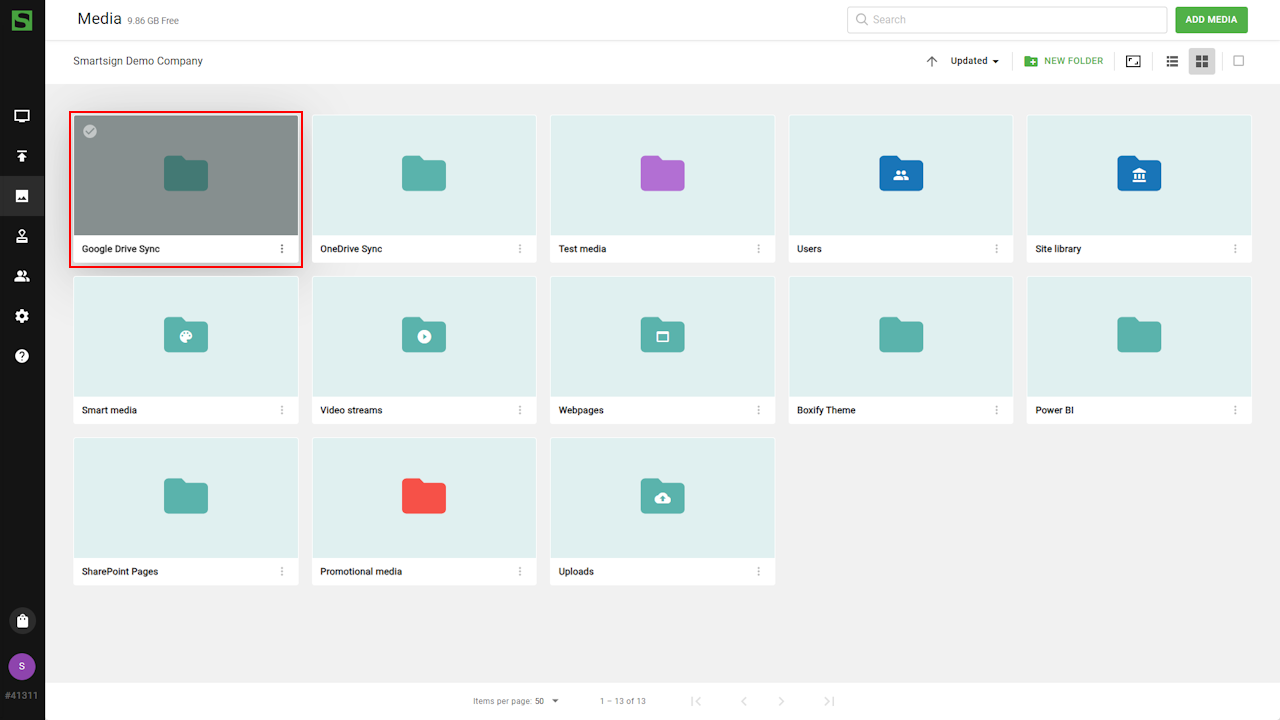
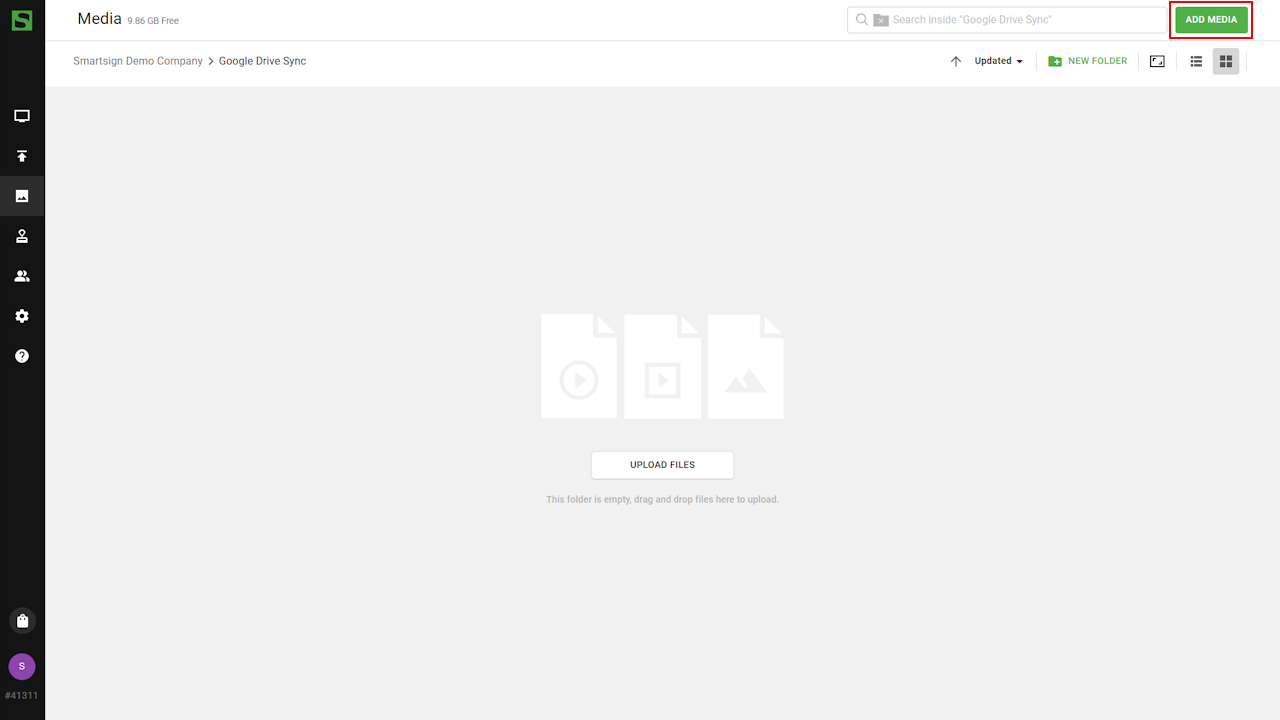
- Open folder, select Add media and then More.
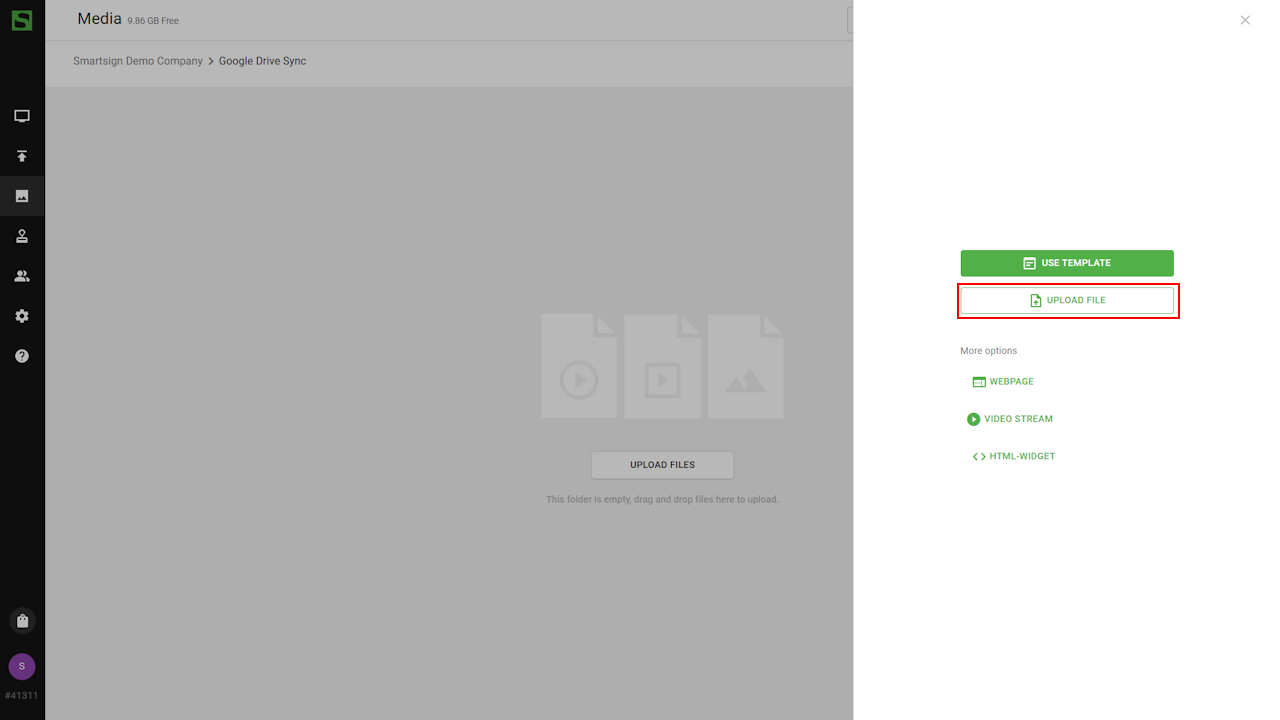
- Under Content platforms, select Google Drive.
- Select Add from Google Drive.
- A popup appears and allows you to authenticate with your
Google account.
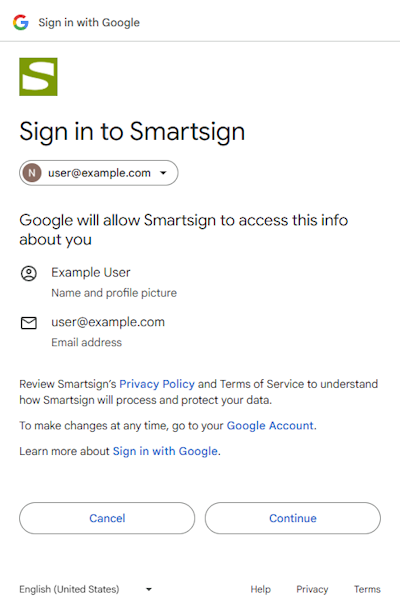
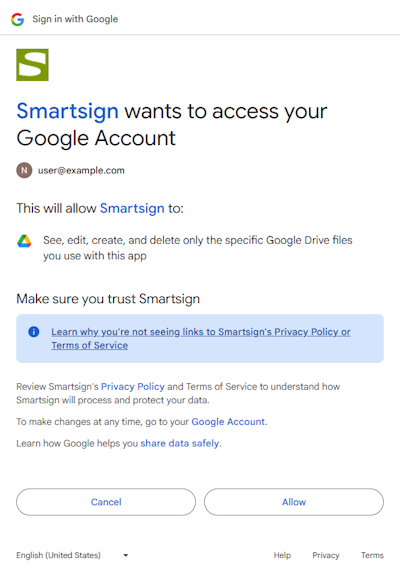
- The first time you authenticate, you may need to allow pop-ups in your web browser.
To allow pop-ups in most browsers, click the lock or alert icon on the right side of the address bar and select Always allow, or open Site Settings to manage pop-up permissions.
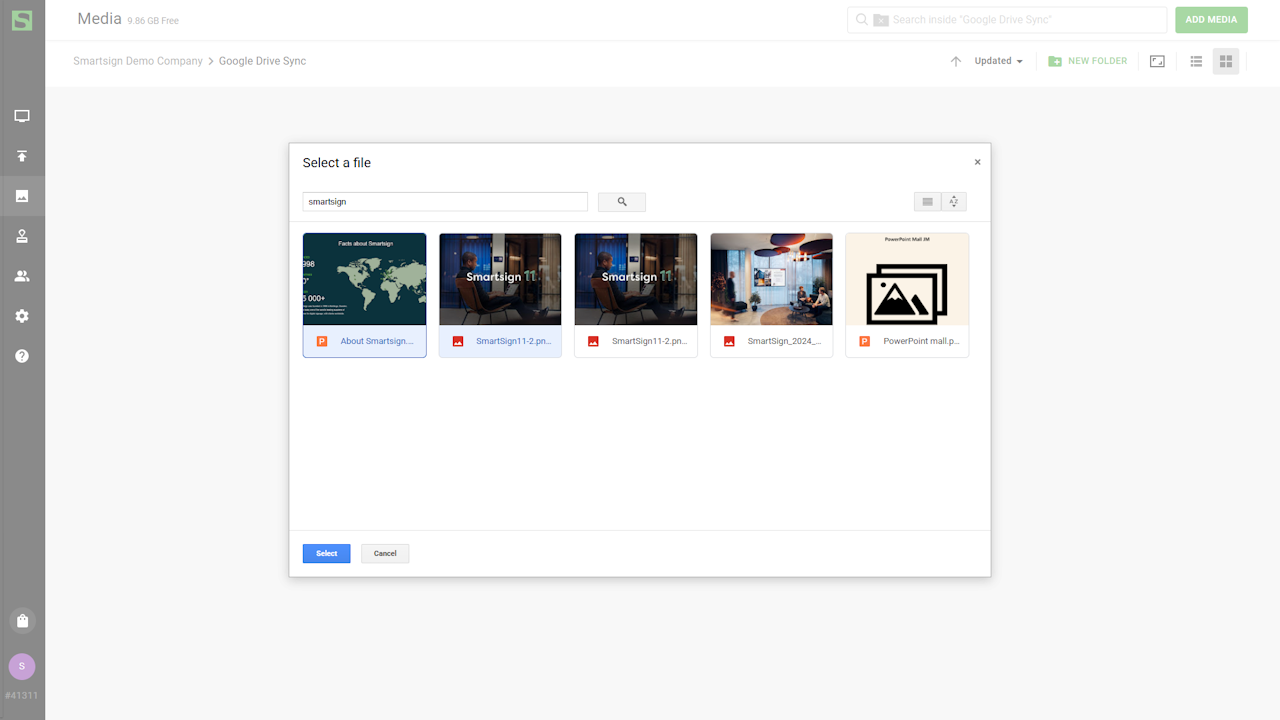
- After authentication, browse and select one or more files you want to use from
Google Drive. You can select up to 50 files at a time. Supported files
include images (PNG, JPEG), videos (MP4, MOV), PDF, PowerPoint, Word
and Excel files, and Google Docs, Sheets and Slides, which are
converted to PDF. Folders can't be synchronized.
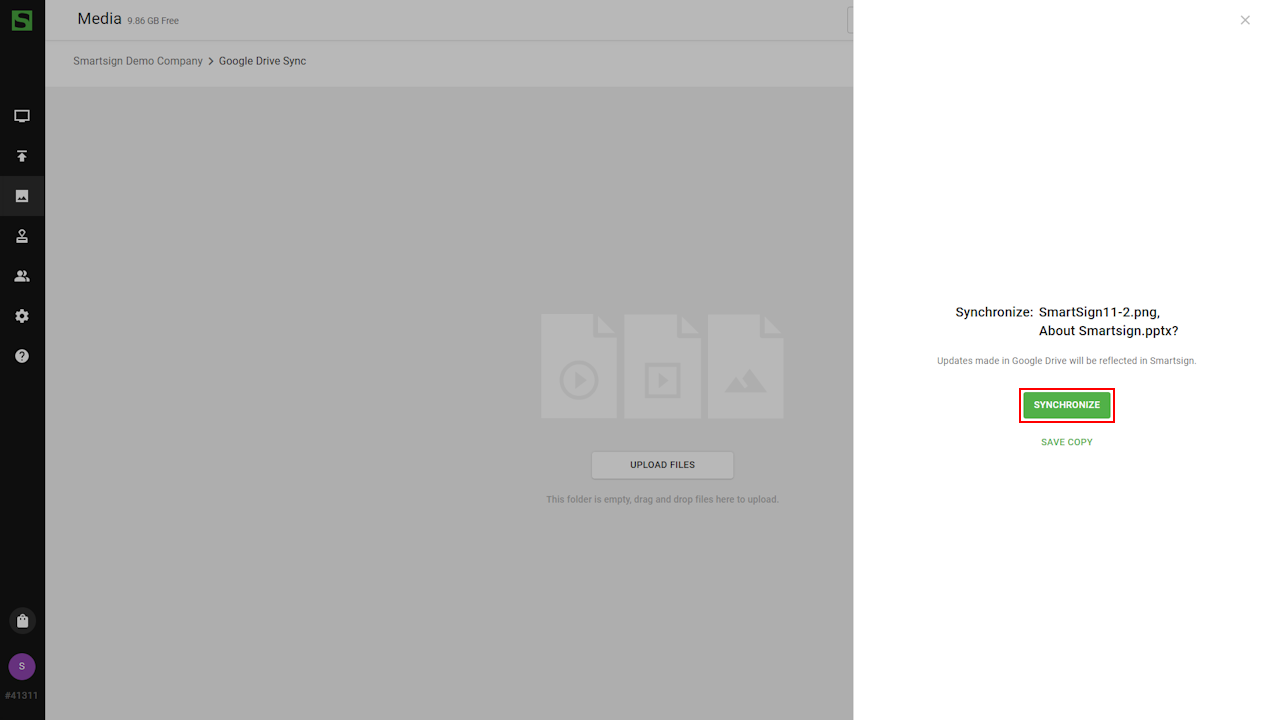
- Select Synchronize to keep the files linked to Google Drive, or
Save copy to import a copy that is not updated when the file
changes.
- Once the sync is complete, you can book the content on your screens.
Changes made to the file in Google Drive will automatically be reflected
on your screens after the next synchronization.
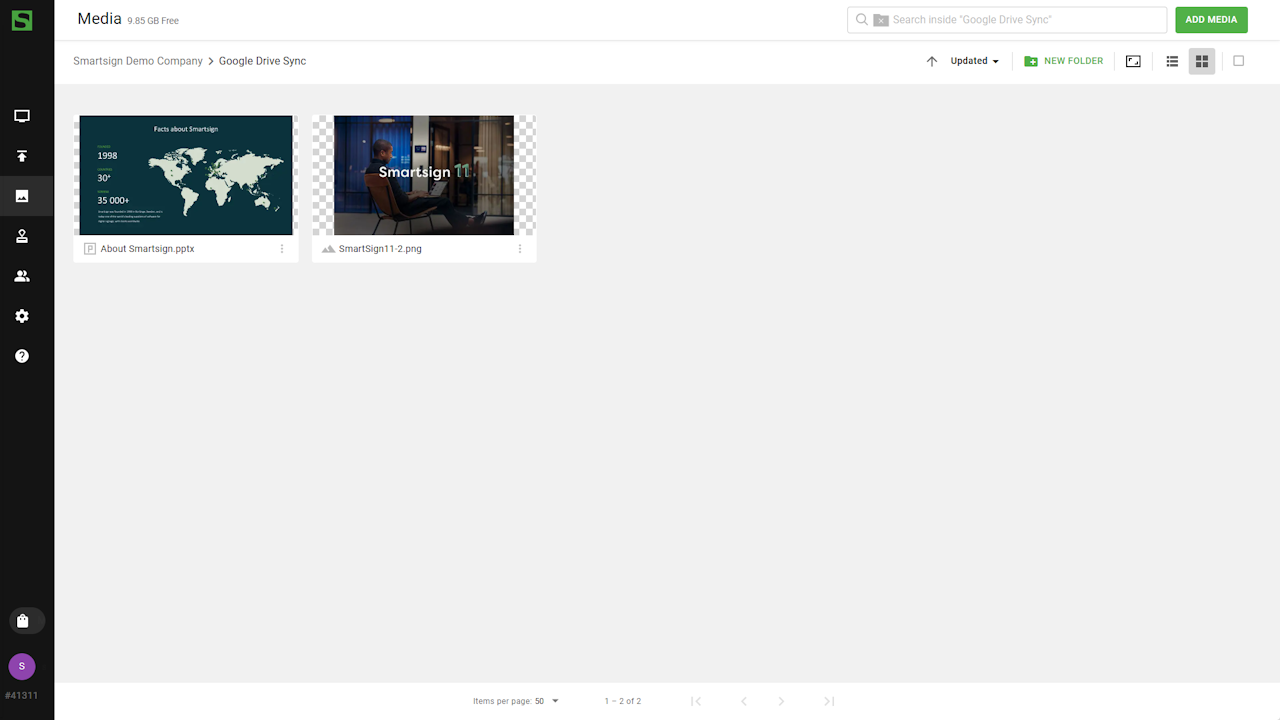
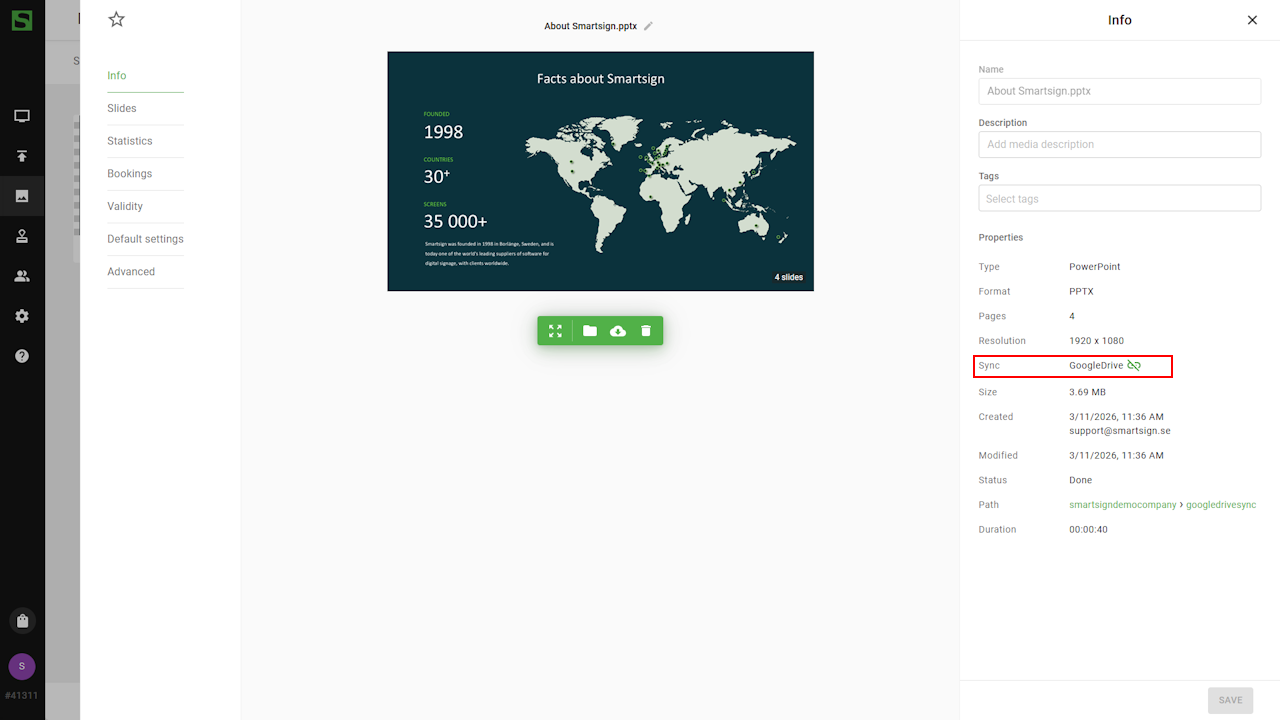
- The file details show which sync source is used.
Turn on Show in media library menu under More to add Google Drive directly to the Add media menu. You can also add Google Drive files from Add media when you edit a booking playlist or a template.
Manage synchronized files
- To synchronize a file right away, open the options menu on the media item and select Synchronize.
- To see when a file was last synchronized, hover over Sync in the Info tab of the media item. Sync errors are shown there too, for example when the file has been deleted or moved to the trash.
- While a file is synchronized, you can't rename or replace it in Smartsign. If you rename the file in Google Drive, the media item gets the new name.
- If you delete the file in Google Drive, synchronization stops and the media item keeps its last version.
- To stop synchronizing, select the sync icon next to Sync in the Info tab, and then Remove sync. The media item stays in the Media Library.
Permissions required
| Permission | Description |
|---|---|
| https://www.googleapis.com/auth/drive.file | See, edit, create and delete only the specific Google Drive files you use with this app* |
* This is the Google recommended least privilege permission. There is no equivalent read-only permission available.